01Why the linen decides the review
Ask any host who has been running a short let for a few years what guests complain about, and the answer is rarely the size of the flat or the distance to the Tube. Those things are in the listing, so guests know what they are booking. What they do not know in advance is whether the bed will be fresh, whether the towels will be soft and whether the bathroom will smell clean. Those are the details that turn a four-star stay into a five-star one, or a five-star stay into a refund request.
Linen is also the part of a changeover that is easiest to get wrong under pressure. A cleaner with a two-hour window between an eleven o'clock check-out and a three o'clock check-in has to strip beds, clean the kitchen, scrub the bathroom, empty bins, restock the basics and remake every bed. If the clean set is missing a pillowcase, or a towel comes out of the cupboard with a faint grey mark, there is no time to fix it. The guest walks in, takes a photo, and the photo ends up in a message or a review.
This guide walks through the whole linen side of a changeover, from what a set should contain to how many sets a flat needs, how to strip and bag used linen, how to check for stains and damage, how to make a bed that looks good in a photo and how to work with cleaners and concierges. It is written for London hosts, but most of it applies anywhere.
The three things guests notice first
Guests rarely inspect a bed closely, but they notice three things within a minute of arriving. The first is smell: a bedroom that smells of fabric that has been folded damp, or of a strong scented detergent, makes people suspicious of everything else. The second is the look of the bed from the doorway: flat, tight, white and even, with pillows standing up, reads as clean. The third is the feel of the towels when they reach for one after a long journey. A hard, scratchy towel feels cheap, even in an expensive flat.
Why hosts underestimate linen
Linen looks like a small cost next to rent, service charges and platform fees, so it tends to be managed casually. A few spare sheets are bought, washed in the flat's own machine and dried on a rack in the bedroom. That works for a single flat with a few stays a month. It stops working the moment bookings pick up, a cleaner leaves, or a second property is added. Most of the problems below come from running a busy short let on a system designed for occasional use.
02What a full changeover set contains
A changeover set is everything one bed and its guests use during a stay. Getting the set right before the guest arrives saves a panicked search through the cupboard later. This is what most hosts put out per bed:
| Item | Single bed | Double or king bed |
|---|---|---|
| Fitted or flat sheet | 1 | 1 |
| Duvet cover | 1 | 1 |
| Pillowcases | 2 | 4 |
| Bath towels | 1 | 2 |
| Hand towels | 1 | 2 |
| Bath mat | 1 per bathroom | 1 per bathroom |
| Tea towels | 1–2 per kitchen | 1–2 per kitchen |
Keep each set together: folded inside one of its own pillowcases, a set comes out of the cupboard in one piece and nothing goes missing.
Extras worth adding
Many hosts add items to the basic set as their listing grows. A mattress protector should be on every bed and changed whenever it is marked, and at regular intervals even when it looks clean. A second duvet cover per bed is useful in case of a spill mid-stay. Face cloths are expected by some guests, especially those coming from countries where they are standard. Pool or beach towels are rarely needed in London but some hosts keep a set of darker towels for guests who want to remove make-up or go to the gym. A throw or blanket on the sofa adds comfort, but it also needs washing, so count it in the set if guests use it.
Matching the set to the listing
The set should match what the listing promises. If the listing says the flat sleeps four with a sofa bed, the sofa bed needs its own set: sheet, duvet cover, pillowcases and towels for two more people. Hosts often forget this until a family of four arrives and asks where the extra towels are. If the listing mentions hotel-quality linen, guests will expect crisp white cotton and thick white towels, not a mixed bundle of patterned sheets.
03How many sets each bed needs
The simplest rule for a busy short let is three sets per bed: one on the bed, one being washed, and one clean and ready in the cupboard. With only two sets, any delay in washing leaves you with nothing to put on the bed. With three, you have a cushion for a late return, a stain that will not come out or a guest who stays an extra night.
| Situation | Sets per bed | Why |
|---|---|---|
| Occasional stays, host washes at home | 2 | Time to wash and dry between stays |
| Regular stays, laundry service collects weekly | 3 | One on the bed, one at the laundry, one spare |
| Back-to-back stays most days | 3–4 | Covers same-day turnarounds and slow returns |
| Several flats sharing one store cupboard | 3 per bed, plus a shared reserve | Reserve covers damage and loss across the portfolio |
Why towels need more than sheets
Towels wear out faster than sheets, get stained more often (make-up, fake tan, hair dye, blood from shaving) and go missing more often too. Guests take them to the gym, leave them at the beach or pack them by mistake. It is sensible to keep one more set of towels per bathroom than you keep of sheets, so that a damaged or missing towel never leaves a bathroom short.
When to replace a set
Sheets and towels do not last forever. Replace a set when sheets have thinned or bobbled, when whites have turned grey or yellow despite washing, when towels have gone thin or hard, or when a stain has set. Many hosts replace their whole stock on a planned cycle rather than one piece at a time, so that every set in the flat looks the same. Mixed old and new linen on the same bed is one of the things guests photograph.
04Stripping the beds and bagging the linen
Strip everything, even if a bed looks unused. Guests sit on beds, nap on top of covers and move pillows between rooms. The only safe assumption is that every piece of linen in the flat has been touched.
- Strip every bed: sheet, duvet cover and every pillowcase, including spare pillows in cupboards.
- Collect every towel, bath mat and tea towel, including ones left on radiators or balconies.
- Shake each item out over the bed: guests leave earrings, chargers and tissues in linen.
- Keep wet towels apart from dry sheets in the bag, so nothing sits damp for hours.
- Count the items into the bag and note the numbers, so you know a set came back complete.
Which bags to use
Strong, washable laundry bags with a drawstring are better than bin bags. Bin bags split, look like rubbish to a concierge, and can end up thrown away by mistake. Use one colour of bag for linen going out to be washed and a different colour, or a clear label, for anything damaged or heavily stained. That way the person collecting the bags knows at a glance what needs special attention.
Damp linen is a problem waiting to happen
A bag of wet towels left in a warm hallway for a day will start to smell, and damp cotton can develop mildew spots that are very hard to remove. If linen cannot be collected the same day, leave the bag open in a cool, airy place rather than sealed in a cupboard. Better still, arrange collections so that used linen leaves the building within a few hours of the changeover.
Protecting the cleaner's time
On a tight turnaround, stripping should be the first job, not the last. Pull the linen as soon as you arrive, bag it, and move on to the kitchen and bathroom. If the clean set is put out early, the bed can be made at the end when everything else is done, so it is not disturbed by vacuuming or dust.
05Checking for stains and damage
Before the bag is closed, a quick look at each item saves a lot of trouble later. The point is not to treat stains in the flat, but to separate the problem items so they get the right treatment at the laundry and so that you know if something needs replacing.
What to look for
Hold each sheet and duvet cover up to the window light. Look for make-up on pillowcases, blood on sheets (often from shaving or nosebleeds), food and drink on duvet covers, and greasy marks from hair products or body lotion. On towels, look for make-up, fake tan, hair dye and the orange-brown marks left by some skin creams. Check for holes, torn seams, burns from hair straighteners and pulled threads.
Recording damage
If a guest has clearly damaged linen, for example a large burn or a towel stained with hair dye, take a clear photo in good light before it goes in the bag, with something in the frame that shows which flat it came from. Platforms usually ask for evidence and dates when a host claims for damage, and a photo taken after washing is much weaker evidence than one taken at check-out.
Things not to do in the flat
Do not scrub a stain with hot water, rub it with soap or pour bleach on it. Heat sets protein stains like blood, rubbing spreads make-up and grease, and bleach can yellow some fabrics or leave a pale patch that is worse than the original mark. A cleaner's job at changeover is to spot, separate and report. Treatment belongs at the laundry, where the stain can be dealt with by type.
06Remaking the bed so it photographs well
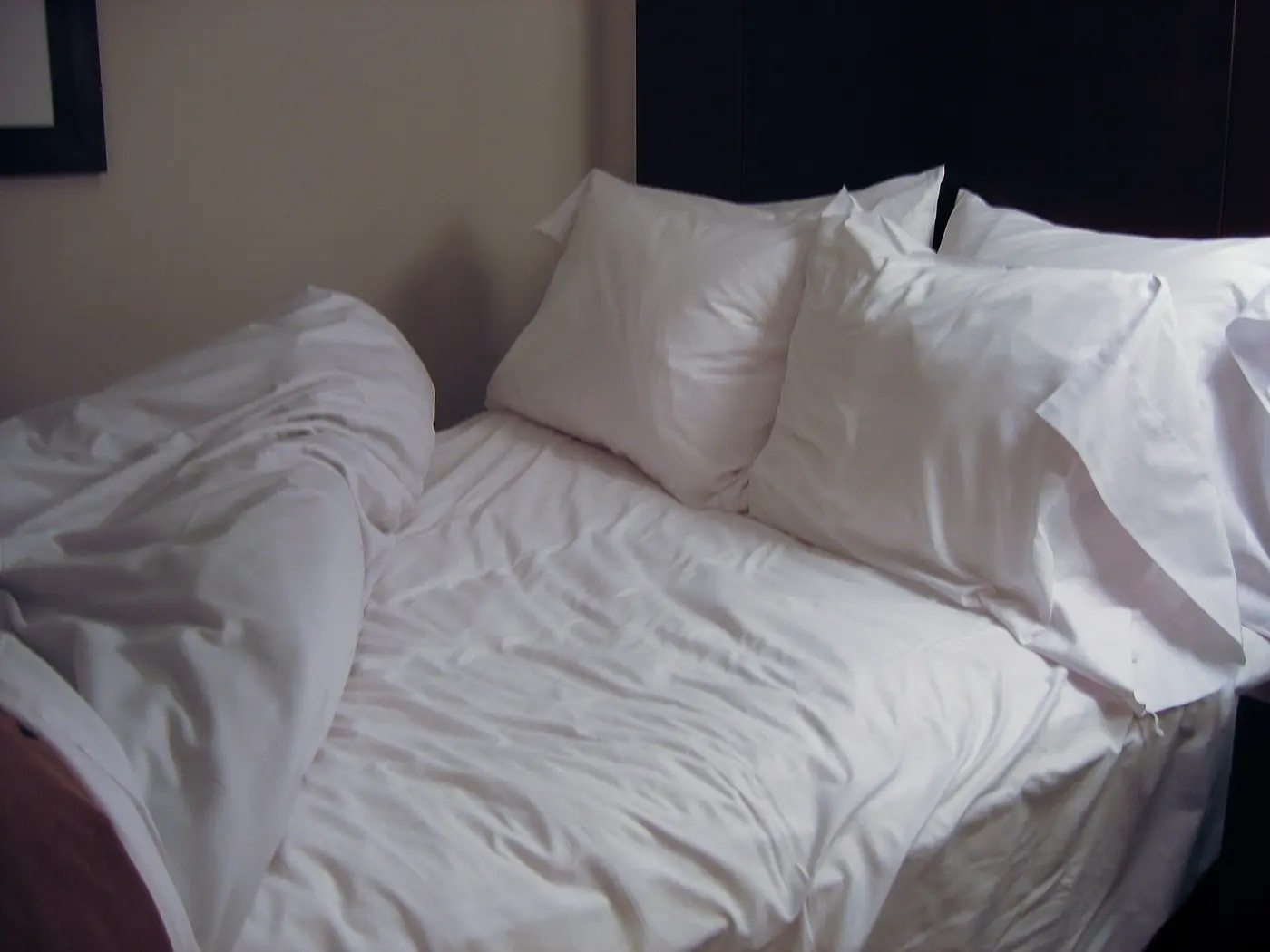
A neatly made bed is the single strongest signal of cleanliness in a short let. Guests often photograph the bedroom within minutes of arriving, and many hosts use the same layout in their listing photos, so every changeover should recreate it exactly.
- Start with a clean mattress protector, smoothed flat with no wrinkles.
- Fit the sheet corner by corner, pulling each corner tight under the mattress.
- Put the duvet into its cover by turning the cover inside out and rolling it over the duvet.
- Shake the duvet so the filling sits evenly, then lay it with equal overhang on both sides.
- Fold the top back neatly, or leave it flat, whichever matches your listing photos.
- Plump every pillow, put the pillowcase on with the open end facing away from the door.
- Stand the pillows up against the headboard in the same order every time.
A layout sheet for cleaners
If more than one person cleans your flats, print a photo of the finished bed and tape it inside the linen cupboard door. It removes guesswork, keeps the look consistent and means a new cleaner can match the listing on their first visit.
Pressed or not pressed
Pressed duvet covers and pillowcases look noticeably smarter than ones that have simply been tumble dried and folded, especially in photos taken in daylight. If your listing is priced at the upper end of the market, pressed linen is one of the cheapest ways to make the bedroom look like a hotel room. If you wash linen yourself, folding it straight from the dryer while still warm reduces creasing a great deal.
07Towels and the bathroom
Towels are judged even more harshly than sheets because guests touch them on wet skin. A clean bathroom with a thin, hard towel still feels disappointing.
Laying out towels
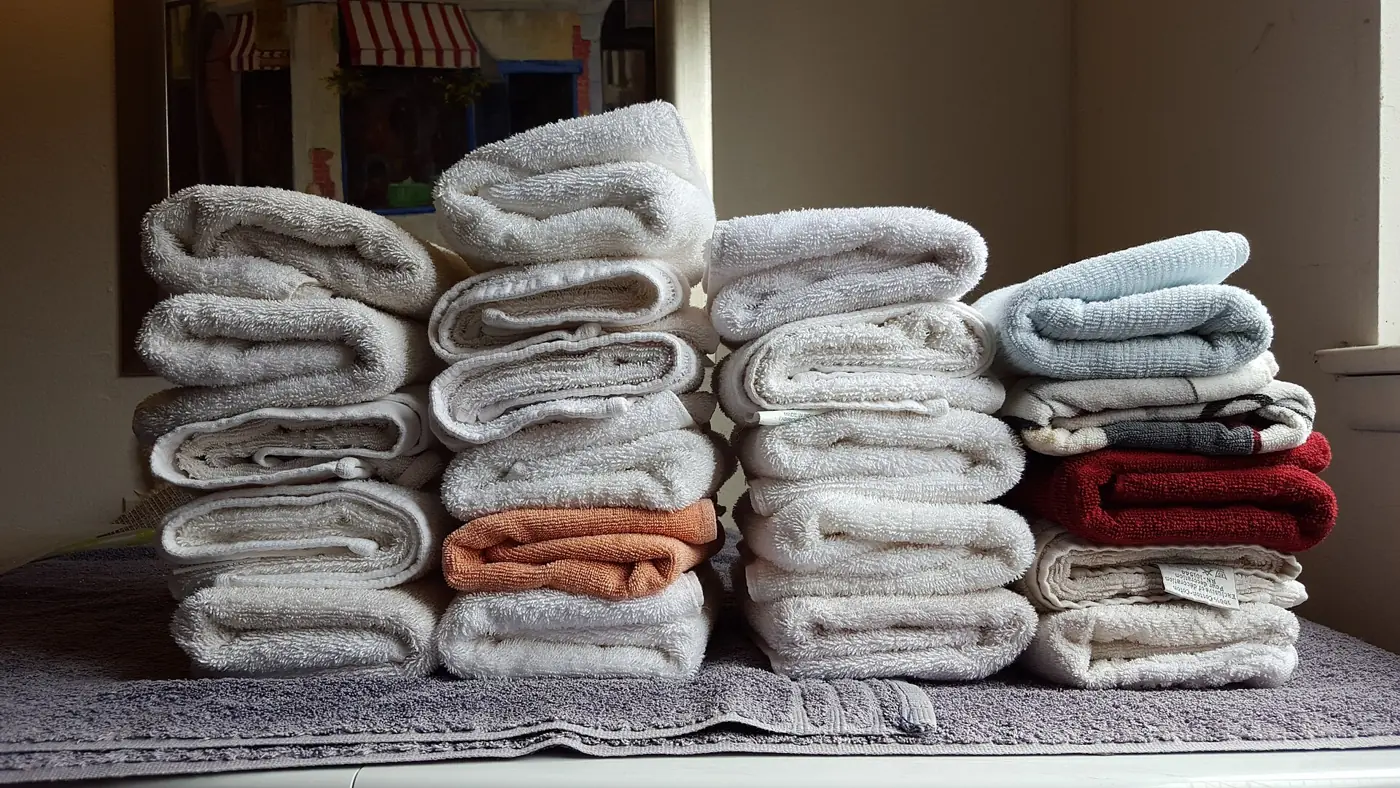
Fold bath towels in thirds lengthways, then in half or thirds again, so the folded edge faces outwards. Stack them on the bed or a shelf in the bathroom, with hand towels on top. Many hosts place one set of towels on the end of the bed so guests see them immediately, and keep a spare set in the bathroom cupboard. The bath mat goes over the side of the bath or on a rail, never on the floor until the guest uses it.
Keeping towels soft
Hard towels are usually the result of too much detergent, fabric softener building up in the loops, or drying on very high heat. London's water is hard in most boroughs, which leaves mineral deposits in the fibres and makes the problem worse. Use the right amount of detergent, avoid heavy softener, and dry towels fully but not to a crisp.
When towels start to smell
A towel that smells musty straight after it has been unfolded was put away damp or left in a wet bag too long. Once that smell is in the fibres it usually needs a hot wash to remove it. This is one of the most common reasons hosts switch from washing in the flat to a laundry service: a flat's own tumble dryer, if it has one, often cannot dry a full load of towels all the way through between stays.
08Drying, folding and storing clean sets
Clean linen can be spoiled between the wash and the bed if it is stored badly. A few simple habits keep it fresh for the next guest.
- Make sure every item is completely dry before it is folded and stored.
- Fold sets together and slip them into one of their own pillowcases.
- Store sets on a shelf, not on the floor, in a cupboard that does not get damp.
- Keep linen away from cleaning chemicals, which can mark or weaken fabric.
- Rotate stock so the oldest clean set is used first.
The linen cupboard
A small, lockable cupboard or a set of labelled storage boxes keeps the clean stock separate from the guests' space. If the flat has no space for a cupboard, store linen in vacuum bags under a bed or on a high shelf in the hallway. Label each set with the bed it belongs to (for example "Bedroom 1, king") so cleaners never have to measure a sheet against a mattress.
How long clean linen keeps
Folded linen stored in a dry cupboard stays fresh for weeks. Linen stored in a damp cupboard, near a boiler or in a bathroom can pick up a musty smell within days. If a set has been in storage a long time, open it and smell it before putting it on the bed.
09Working with cleaners and concierges
In London, many hosts never see their own flats on changeover day. The cleaner arrives, does the turnaround and leaves; the laundry is picked up from the flat, the concierge or the cleaner's own base. That chain only works if everyone knows exactly what to do.
A one-page changeover note
Write a short note for every property: the number of beds and their sizes, the number of sets in the cupboard, where clean sets are kept, where used linen should be left, and who collects it. Include a photo of the made bed and the bathroom. Update it whenever anything changes.
Handing over at the concierge
Many London blocks have a concierge who will hold bags for collection and receive clean linen. It helps to give the concierge a simple label for each flat's bags and a contact number for the person collecting them. Ask whether there is a time of day when the desk is too busy to take deliveries.
When the cleaner changes
Cleaners change more often than hosts would like. When a new cleaner starts, walk them through the changeover note, show them the linen cupboard and explain the stain and damage routine. A new cleaner who does not know the system is the most common cause of missing pillowcases and towels.
10Bed sizes and getting the right sheet on the right bed
A surprising number of changeover problems come down to size. A double sheet on a king mattress will not stay tucked in, a king duvet cover on a double duvet leaves the filling sliding around inside, and a cleaner who cannot tell the difference between the two in a hurry will grab whatever is on top of the pile.
| UK bed size | Typical mattress size | Common mix-up |
|---|---|---|
| Single | 90 × 190 cm | Small single sheets in older flats |
| Double | 135 × 190 cm | Confused with king on a busy day |
| King | 150 × 200 cm | Double duvet covers that look nearly right |
| Super king | 180 × 200 cm | Two singles zipped together need different sheets |
Mattress depth matters as much as width and length. Many short-let flats have deep hybrid mattresses with a topper, and a standard fitted sheet will pop off the corners overnight. Measure the depth including any topper and buy deep-fitted sheets if needed.
Labelling by size
Sewing or writing a small size mark on the care label of every sheet and duvet cover (S, D, K or SK) takes an hour once and saves time on every changeover. Some hosts use a different coloured thread or tag for each size. If you use a laundry service, ask for sets to be folded and grouped by size so they go straight into the right part of the cupboard.
Zip-and-link beds
Some flats use two single mattresses that zip together to make a super king, so the room can be set up as a twin or a double. This is flexible for bookings but adds work: the cleaner needs to know which layout the next guest booked and use the right sheets. Put the layout on the changeover note for each stay.
11The full changeover checklist
This is the whole routine in one place. Print it, laminate it and keep it in the linen cupboard.
- Before the stay: three sets per bed in stock, one clean set per bed ready in the cupboard.
- On arrival: open windows, strip every bed and collect every towel, bath mat and tea towel.
- Shake out every item and check pockets, pillowcases and duvet covers for belongings.
- Check each item for stains and damage; bag problem items separately and photograph damage.
- Bag used linen in strong laundry bags, wet towels kept apart from dry sheets.
- Count items into the bags and note the numbers on the changeover sheet.
- Leave bags where they will be collected: flat, concierge or the cleaner's base.
- Clean the bedroom and bathroom before remaking beds.
- Put on a clean mattress protector, sheet, duvet cover and pillowcases.
- Match the bed to the listing photo: pillows, folds, throws.
- Lay out towels and bath mat to match the number of guests booked.
- Check the cupboard: is there a full spare set for the next stay?
- Record any shortage or damage and tell the host the same day.
How ArkLaundry helps
We collect used linen from your flat, your cleaner or the concierge, wash and fold it in sets, and bring it back ready for the next stay. Changeover sets washed from your own linen start at £9.50 for a single and £14.50 for a double, excluding VAT, with free collection on orders of £50 or more.