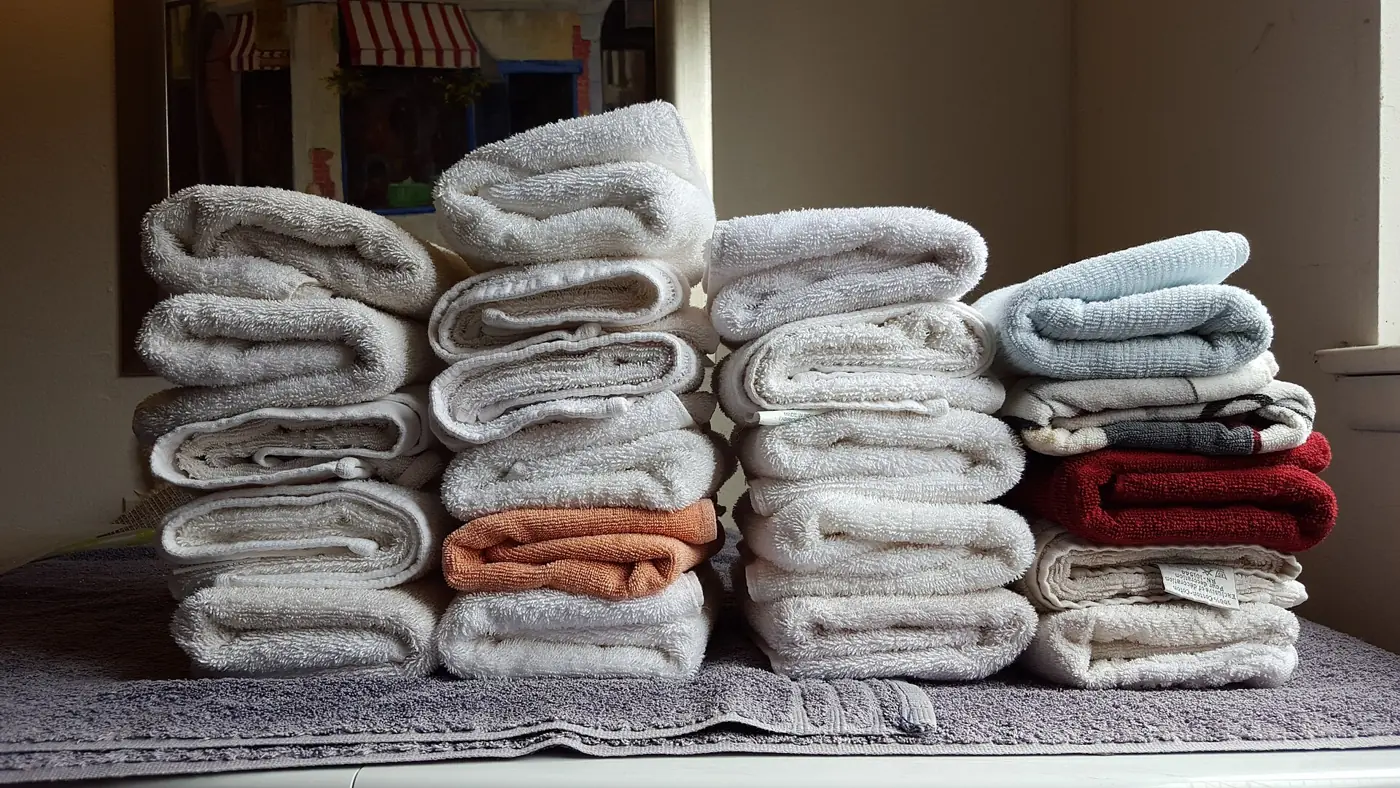
01Short-let linen does a different job
Sheets bought for your own bed might be washed once a week and last for years. The same sheets in a busy short let can be washed two or three times a week, by machines and dryers that are not gentle, and handled by several different people. Over a year, that is the equivalent of many years of home use. Linen that feels lovely in the shop can pill, thin, fade or shrink within months.
There is also a second difference. At home, nobody photographs your bed. In a short let, every guest is a critic with a phone. Linen has to look good from the doorway, feel good against the skin and photograph well in daylight, and it has to keep doing so after dozens of washes.
So buying linen for a short let is less about finding the most luxurious product and more about finding the most durable product that still feels and looks like quality. That usually means choosing a sensible fabric, a weave that hides wear, a colour that can be washed hot, and enough stock that nothing is overworked.
What this guide covers
This guide goes through the choices one at a time: fabric, weave, thread count, colour, fit, closures, pillowcases, towels and bath mats, protectors, quantities and how to test a sample before you commit to a full order. It finishes with a buying checklist you can take with you.
What it does not cover
Prices change constantly and vary between suppliers, so this guide does not recommend brands or quote prices. The aim is to help you read a product description and a care label and know whether the item will survive your listing.
02Fabrics: what sheets are actually made of
The fabric decides most of what follows: how the sheet feels, how hot it can be washed, how fast it dries, whether it creases and how long it lasts.
| Fabric | Feel | Durability in a busy let | Things to watch |
|---|---|---|---|
| 100% cotton | Soft, breathable, natural | Good if well woven | Creases; can shrink if not pre-shrunk |
| Long-staple cotton | Smoother, softer, fewer loose fibres | Very good | Costs more; check the claim is genuine |
| Polycotton (cotton and polyester) | Smooth, less natural feel | Very good; creases less | Can pill; can feel warmer |
| Linen (flax) | Textured, cool, relaxed look | Good, but creases heavily | Expensive; rumpled look not for every listing |
| Lyocell, bamboo-derived blends | Silky, cool | Variable | Often need lower temperatures |
| Microfibre | Very smooth, light | Variable | Can feel synthetic; holds oils |
Cotton
Pure cotton is the default for good reason. It breathes, it softens with washing, and white cotton can usually be washed hot. The quality of cotton varies a great deal. Short fibres leave more loose ends on the surface of the yarn, which wear into bobbles and lint. Longer fibres make a smoother, stronger yarn. Product descriptions often mention long-staple, combed or premium cotton; these are all ways of saying that shorter fibres have been removed.
Polycotton
Polycotton blends cotton with polyester, often in proportions such as 50/50 or 65/35. The polyester adds strength and reduces creasing and shrinkage, which is why hotels and hospitals have used blends for decades. The trade-off is feel: polycotton can feel slightly slippery and warmer than pure cotton, and cheaper blends can pill. A good-quality polycotton percale is a sensible choice for hosts who wash at home and cannot press.
Linen
Pure linen from flax looks relaxed and textured, stays cool in warm weather and becomes softer with every wash. It also creases deeply, which some guests love and others read as unironed. Linen bedding suits listings styled around a natural, lived-in look. It is less suited to listings that promise a crisp hotel bed.
Newer fibres
Lyocell and bamboo-derived fabrics feel cool and silky and are popular in some markets. In a short let, check the care label carefully: many need cooler washes and gentler drying, which limits how hot you can wash for hygiene. Test one set before buying many.
03Weave: percale, sateen and the rest
Two sheets made from the same cotton can feel completely different because of the weave. The weave is how the threads cross each other, and it affects feel, strength and how wear shows.
Percale
Percale is a simple one-over, one-under weave. It feels crisp, cool and matte, a bit like a good cotton shirt. Because every thread is locked in tightly, percale is strong and resists pilling well. It creases more than sateen, but it presses beautifully, and pressed percale is the classic hotel sheet. For most short lets, a good percale is the safest choice.
Sateen
Sateen uses a weave in which more threads float on the surface, giving a smooth, slightly shiny, silky feel. Guests often describe sateen as luxurious. The floating threads, however, are more exposed to friction, so sateen can pill and snag sooner than percale under heavy use. It also shows wear patches faster. Sateen suits listings at the top end where linen is replaced regularly.
Jersey, flannel and others
Jersey (knitted, like a t-shirt) and brushed cotton or flannel are cosy and popular in homes, especially in winter, but they stretch, pill and lose their shape quickly in commercial washing. They are rarely a good choice for short lets.
04Thread count: what it really means
Thread count is the number of threads in a square inch of fabric, counting both directions. It is the number most heavily used in marketing, and the least reliable guide to quality.
Why higher is not always better
Up to a point, more threads mean a denser, smoother, stronger fabric. Beyond that point, manufacturers can raise the number by using thinner yarns twisted together, and counting each strand separately. A sheet sold with a very high thread count may be made of weaker yarns and feel heavier and hotter without lasting any longer.
A sensible range
For durable short-let sheets, many hosts and hotels choose percale somewhere in the low-to-mid hundreds, made with good cotton. Above that, the quality of the fibre and the weave matter more than the number. Feel a sample and read the full fabric description rather than buying by thread count alone.
Weight tells you more
If a supplier gives a fabric weight (grams per square metre), it is often a more honest guide. A heavier percale of good cotton usually lasts longer than a light one with a higher thread count.
05Colour: why most hosts choose white
White linen dominates hotels and short lets, and it is not just for looks.
- White can usually be washed hot, which helps hygiene and removes body oils.
- White can be treated more firmly for stains than coloured fabric.
- Every set matches every other set, so mixing and replacing is easy.
- White reads as clean in photos and from the doorway.
- White does not fade unevenly the way coloured linen does.
The case for colour
Coloured or patterned linen can make a listing look more like a home and less like a hotel, which suits some styles and guests. It also hides minor marks better. The cost is that coloured linen fades, can bleed in the wash, usually needs cooler temperatures and has to be kept apart from whites. If you want colour, consider keeping sheets white and adding colour through a throw, cushions or a coloured duvet cover that is not in contact with skin.
Off-white, grey and stone
Off-white and light grey are popular compromises. They look calm and stylish, hide minor yellowing better than bright white and can often still be washed fairly warm. Check the label: some greys are dyed in ways that fade or streak at higher temperatures.
06Getting the fit right
A sheet that fits perfectly looks better, lasts longer and is faster to put on. A sheet that is too small strains at the corners and tears; a sheet that is too big bunches, wrinkles and looks untidy in photos.
Fitted or flat
Fitted sheets are quicker for cleaners and stay put overnight, which is why most short lets use them. Flat sheets look crisper when tucked hospital-style and are easier to press and fold. Some hosts use a fitted sheet on the mattress and a flat sheet between guest and duvet, hotel style, which keeps the duvet cover cleaner but adds a layer to every changeover.
Depth
Measure each mattress's depth including any topper and choose fitted sheets with enough pocket depth to tuck well under. Deep mattresses with standard sheets are the commonest cause of corners popping off in the night.
Shrinkage
Cotton can shrink, especially in the first few hot washes. Choose sheets described as pre-shrunk or with a generous fit, and wash new linen once before it goes on a bed so that any first shrinkage happens before guests see it.
07Duvet covers and their closures
The way a duvet cover closes affects how fast cleaners can change it and how long it lasts.
| Closure | Speed for cleaners | Durability | Notes |
|---|---|---|---|
| Envelope flap, no fasteners | Fast | Excellent: nothing to break | Duvet can slip out if flap is short |
| Poppers or press studs | Medium | Good, but studs can pull off | Can damage other items in the wash |
| Buttons | Slow | Buttons come loose | Classic look; extra work |
| Zip | Fast | Zips can break or catch | Can scratch skin if exposed |
Why many hotels choose envelope closures
A deep envelope flap at the foot of the cover holds the duvet in place with nothing to break, catch or come off in the machine. It is the most durable option and is quick to change.
Corner ties
Some duvet covers have ties inside each corner to hold the duvet in place. They are useful for keeping the duvet from sliding, but in a busy let they can tangle in the wash. Cleaners often skip tying them, so decide whether they will really be used.
08Pillowcases and pillow protectors
Pillowcases take the worst of the wear: make-up, hair products, sweat and drool. They are also the item most often lost, because they get used as bags and go home in suitcases.
Housewife or Oxford
A housewife pillowcase is a plain case with an internal flap to hold the pillow in. An Oxford pillowcase has a flat border around the edge, which looks smart but needs pressing to look its best and is slower to fold. For most short lets, housewife cases are more practical. Oxford cases suit listings styled like a boutique hotel, if the laundry presses them.
Buying extra
Buy more pillowcases than you think you need. Many hosts keep at least one extra pillowcase per pillow in stock, on top of the usual three sets, because these are the items most often stained beyond saving or not returned.
Pillow protectors
A zipped, washable pillow protector under each case keeps the pillow itself clean for much longer. Choose protectors that are breathable and quiet, not crinkly plastic.
09Towels: cotton, weight and pile
Towels are where many hosts economise, and guests notice it immediately. A good towel is soft, absorbent, dries reasonably quickly and keeps those qualities through frequent washing.
| Weight | Feel | Notes for short lets |
|---|---|---|
| Light (around 400 GSM and under) | Thin, quick-drying | Feels cheap as a bath towel; fine for gym or beach |
| Medium (around 450–600 GSM) | Soft, absorbent | The usual choice for hotels and busy lets |
| Heavy (around 600 GSM and over) | Thick, plush | Feels luxurious; slower to dry and heavier to wash |
Weight
Towel weight is usually given in grams per square metre (GSM). It is a rough guide to how thick and absorbent the towel will feel.
The middle range is the sweet spot for most short lets: soft enough to feel generous, light enough to dry fully between stays.
Cotton type and pile
Towels made from longer cotton fibres shed less and stay soft for longer. Pile is the loops on the surface: longer loops feel plusher but snag more easily on jewellery and nails. Ring-spun cotton, zero-twist and combed cotton are all descriptions of how the yarn is made, generally aiming at softness and less shedding.
Edges and hems
Look at the hem and the woven border at each end. A strong, double-stitched hem is what stops a towel fraying after twenty washes. A towel can have a lovely pile and still fall apart at the edges.
Waffle and Turkish towels
Waffle-weave and flat-woven Turkish towels are light, dry quickly and pack small. Some guests love them; others feel short-changed if they expect a thick towel. They work well as an extra, not as the only bath towel.
10Bath mats, tea towels and the other bits
The small items get forgotten at buying time and then let the set down.
Bath mats
Choose thick, absorbent cotton bath mats without rubber backing. Rubber backing breaks down with frequent hot washing and drying, leaves crumbs in the machine and can mark floors. A heavy terry bath mat in the same colour as the towels makes the bathroom look like a set.
Tea towels
Linen or cotton tea towels last well and dry glass without streaks. Dark or patterned tea towels hide food stains, but keep them apart from white linen in the wash so they cannot run.
Face cloths
Face cloths are expected by some guests and unknown to others. If you supply them, make them the same colour as the towels, or a darker colour if you are using them as make-up cloths.
11Mattress and duvet protectors
Protectors are the least glamorous linen you will buy and among the most important. They keep the mattress and duvet clean, which means fewer expensive deep cleans and fewer smells that guests cannot quite place.
- Choose mattress protectors that are breathable, quiet and machine washable.
- A water-resistant layer is worth having in family listings and studios.
- Make sure the fitted skirt is deep enough for the mattress and topper together.
- Buy at least one spare protector per bed size.
- Consider a duvet protector or a second duvet cover as an inner layer if duvets are hard to clean.
12How much to buy at the start
Most hosts work on three full sets per bed, plus a small reserve across the property or portfolio. Towels and pillowcases need a little more because they wear and go missing faster.
| Item | Per bed or bathroom | Why |
|---|---|---|
| Sheets and duvet covers | 3 sets | On the bed, being washed, spare |
| Pillowcases | 3 sets, plus extras | Stained and lost most often |
| Bath and hand towels | 3–4 sets | Stained, worn and taken |
| Bath mats | 3 per bathroom | Wear quickly |
| Mattress protectors | 2 per bed | One on, one spare |
| Tea towels | 4–6 per kitchen | Used heavily, cheap to replace |
Buying all at once
Buying the whole stock in one order from one supplier means every item matches, which looks better in photos and makes swapping between beds easy. If you top up later, note the exact product so you can reorder the same thing.
13Testing a sample before you commit
Before you buy for every bed, buy one set and put it through the conditions it will face.
- Wash it several times at the temperature you plan to use.
- Dry it the way it will be dried: tumble, line or by your laundry.
- Check it for shrinkage against the mattress.
- Look closely at the surface for pilling and fuzz.
- Check the colour against an unwashed piece if you have one.
- Sleep in it yourself, or ask your cleaner for an opinion.
What a failed sample tells you
If a sample shrinks, pills or fades after a few washes, a full stock will do the same within weeks of a busy season. Buying one set first is the cheapest insurance you will ever take out on linen.
14Reading care labels before you buy
The care label tells you how hard an item can be washed, and therefore whether it suits a short let.
- Check the maximum wash temperature: hosts generally want white sheets and towels that can go at 60°C.
- Check whether tumble drying is allowed and at what heat.
- Look for warnings such as "wash before use", "wash separately" or "do not use fabric softener".
- Avoid anything marked dry clean only for beds and bathrooms.
- Keep a photo of each label so your laundry knows exactly what it can do.
Labels and laundry services
If you use a laundry service, tell them what your linen is made of and share the label photos. Linen with a cool-wash label cannot be washed hot, however much you would like it to be.
15Duvets and pillows to put inside the linen
The duvet and pillows are not linen in the strict sense, but they decide how the bed feels and they have to be washed or cleaned too. Choosing them with a short let in mind avoids a lot of trouble later.
Tog ratings
In the UK, duvet warmth is measured in tog. A higher tog is warmer. Roughly, a summer duvet sits around 4.5 tog, a spring or autumn duvet around 9 tog, and a winter duvet around 13.5 tog. Many hosts choose a 10.5 tog all-year duvet, or an all-seasons duvet made of two layers that clip together so it can be adjusted. In London flats with good heating, very warm duvets often make guests too hot, especially in new-build blocks that hold heat well.
Filling
Synthetic (hollowfibre or microfibre) duvets and pillows are lighter to wash, dry faster and suit guests with feather allergies. Feather and down feel more luxurious and last longer with care, but they take much longer to dry fully and some guests are allergic. For most short lets, a good synthetic duvet that can be washed regularly is the practical choice, with feather kept for listings at the top end.
Pillow choice
Guests disagree about pillows more than anything else. Offering two pillows per person, one firmer and one softer, covers most preferences. Label them discreetly or mention it in the house guide. A spare pillow in the wardrobe solves the guest who likes three.
Washability
Before buying duvets and pillows, check they can be washed and dried in a commercial machine, and at what temperature. A duvet that can only be dry cleaned is expensive to keep fresh in a short let.
16The buying checklist
Take this list with you, or keep it open when you order online.
- Fabric: good cotton or a quality polycotton; check the fibre description.
- Weave: percale for durability and a crisp hotel feel; sateen only if you will replace often.
- Thread count: a sensible mid-range from good cotton, not the highest number on offer.
- Colour: white or a light neutral that can be washed warm.
- Fit: correct size and pocket depth for each mattress, including toppers.
- Duvet covers: envelope closure or durable fastenings.
- Pillowcases: housewife style, plus spares.
- Towels: medium weight, strong hems, same colour as bath mats.
- Bath mats: thick cotton, no rubber backing.
- Protectors: breathable, quiet, washable, one spare per bed.
- Quantity: three sets per bed, more for towels and pillowcases.
- Sample: one set tested through several washes before buying all.
How ArkLaundry helps
Whatever linen you choose, we wash it to the label, dry it fully and fold it in matching sets. Double sets from your own linen are £14.50, excluding VAT.