01Why hotels choose white, and why it is a commitment
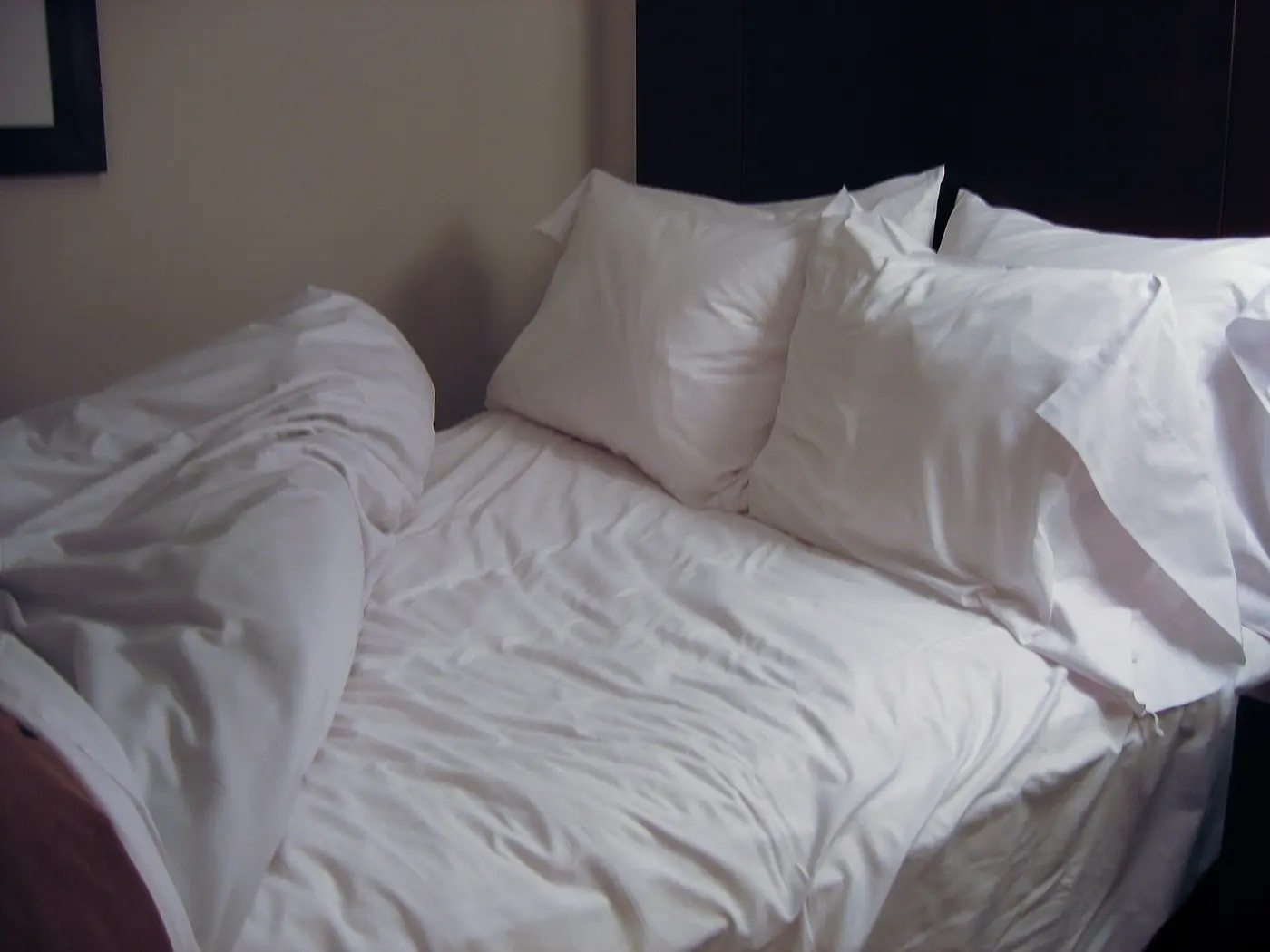
White bed linen has been the standard in hotels for generations. It signals cleanliness in a way no colour can, because any mark shows and therefore a spotless white bed proves it has been cleaned. It photographs brightly, it matches every room, it can be washed hot and treated firmly, and any sheet can go on any bed of the right size. For a small hotel or guest house, it is the simplest way to make a room look fresh.
The catch is that white is unforgiving. It shows every stain, but it also shows slow decline. A sheet does not go from white to grey in one wash. It loses a little brightness each time, almost invisibly, until one day a new sheet is put beside it and the difference is obvious. Guests notice the difference too, especially when one pillowcase on a bed is noticeably duller than the others or when a sheet has a yellow cast along the pillow line.
Keeping whites white is not about one magic product. It is about understanding the handful of causes of greying and yellowing, and building washing, drying, handling and storage habits that avoid each one. Most of these habits cost nothing, and together they can add years to the useful life of a hotel's linen.
Two different problems
Greying and yellowing look similar from a distance but have different causes and different cures. Greying is usually dirt and dye from the wash itself settling back onto the fabric. Yellowing is usually body oils, sweat and residues that have built up and oxidised, or damage from heat and the wrong chemicals. Telling them apart is the first step to fixing them.
02Where grey comes from
Grey linen is linen that has picked up a fine, even layer of soil or dye from the wash water. Every wash loosens dirt from the fabric. If the wash cannot hold that dirt in the water until it drains, some of it settles back onto the fibres. Over many washes, the result is a dull, grey look that no single wash seems to cause.
Too little detergent
Detergent does two jobs: it lifts dirt off the fabric and it holds dirt suspended in the water. With too little detergent, the second job fails, and the dirt goes back onto the linen. This is one of the most common causes of greying, especially in places where staff are trying to save money on detergent.
Overloaded machines
A drum packed too full cannot move the linen freely, so water and detergent cannot circulate properly. Dirt is not carried away; it is simply moved around. Overloading also means poorer rinsing, which leaves residues that attract more dirt.
Mixing with colours
Even a single coloured item in a white load can release a small amount of dye. One wash may show nothing, but repeated over months, it greys the whole stock. Dark tea towels, coloured napkins, staff uniforms and bath mats are common culprits.
Water that is too cool
Many soils, especially body oils, are removed far more effectively at higher temperatures. White cotton and polycotton sheets washed too cool for too long gradually hold more soil than they release.
Hard water
Most of London has hard water, rich in calcium and magnesium. These minerals react with some detergent ingredients and can leave deposits in the fabric that trap dirt and dull the colour. Commercial laundries manage this with water softening and the right detergent dosing; domestic machines often cannot.
03Where yellow comes from
Yellowing usually starts where people touch the linen most: the pillow line on the bottom sheet, the top of the duvet cover and the pillowcases themselves. That pattern is the clue.
Body oils and sweat
Skin produces natural oils and sweat every night. If they are not fully removed in the wash, a thin layer builds up in the fibres. Over time, this residue oxidises and turns yellow. It is the same reason white shirt collars yellow.
Hair and skin products
Moisturisers, hair oils, serums and some sunscreens add more oils to the pillow area. Some products also contain ingredients that discolour when they react with heat or with minerals in water.
Detergent residue
Too much detergent, or poor rinsing, can leave residue that yellows with heat over time. This is why using more detergent is not a cure for greying: the dose has to be right, and rinsing has to be thorough.
Chlorine bleach on the wrong fabric
Chlorine bleach can whiten cotton but can yellow polyester and some finishes. Polycotton sheets treated with chlorine bleach too often may become more yellow, not less. Many laundries use oxygen-based bleaching for this reason.
Heat damage
Very high dryer temperatures and ironing too hot can scorch fibres slightly, leaving a faint yellow or beige cast. It is often seen on the folded edges of sheets that have been over-dried or pressed with too much heat.
Storage
White linen stored for a long time in poor conditions can yellow on its own: in sunlight, near heat, in plastic that traps moisture, or on untreated wooden shelves that can transfer acids to fabric over time.
04Telling the problems apart
Before changing anything, look closely at the linen and work out which problem you are dealing with.
| What you see | Likely cause | First thing to try |
|---|---|---|
| Even, dull grey all over | Soil or dye redeposition | Separate whites, correct detergent dose, don't overload |
| Yellow band where heads lie | Body oils and products | Hotter wash where label allows, pre-treat pillow area |
| Yellow all over polycotton | Chlorine bleach or residue | Stop chlorine; check dose and rinsing |
| Yellow along folds | Heat or storage | Lower dryer heat; improve storage |
| Pink, blue or grey tint | Dye from a coloured item | Find and remove the item; rewash promptly |
| Stiff, dull, rough feel | Hard water deposits | Water softening or laundry with treatment |
Compare with new
Keep one brand-new, unused sheet or pillowcase from each range in a sealed bag, away from light. When you are unsure how far your stock has drifted, put a washed sheet next to the new one in daylight. The difference tells you more than any description.
05A washing routine that keeps whites white
Most of the solution is simply washing correctly, every time. These habits matter whether you wash on site or use a laundry, because they tell you what to look for.
- Wash whites only with whites, never with coloured items of any kind.
- Use the correct detergent dose for the load size, soil level and water hardness.
- Load the machine to its rated capacity, not beyond.
- Wash at the highest temperature the care label allows for that fabric.
- Make sure rinsing is thorough, with enough water to remove detergent and soil.
- Pre-treat heavily soiled pillowcases and the pillow line of sheets.
- Dry fully, but avoid excessive heat.
Temperature and care labels
White cotton sheets and pillowcases can often be washed hot, which helps remove body oils. Polycotton may have a lower maximum temperature. Always follow the label. If the label limits temperature, the detergent and the wash process have to do more of the work.
Separate heavily soiled items
Pillowcases with make-up, sheets with heavy body soiling and anything stained should be washed in a separate load or pre-treated first. Washing them with lightly soiled linen spreads soil across the whole load.
06The pillow line and pillowcases
The pillow area is where whites fail first. Hotels that look after this area specifically can extend the life of their linen considerably.
Pillow protectors
A washable protector under every pillowcase keeps oils from reaching the pillow itself, which otherwise turns yellow and passes the colour back to the pillowcase. Protectors should be washed regularly.
Pre-treatment
Pillowcases and the top part of bottom sheets benefit from a pre-treatment that breaks down oils before the main wash. Commercial laundries often build this into their process for hotel linen.
Rotation
Pillowcases are used far more intensively than other items. Rotating stock evenly, rather than taking from the top of the pile every time, stops a few pillowcases ageing much faster than the rest.
07Drying without damage
Drying is often blamed less than washing, but it causes its share of yellowing and wear.
Not too hot, not too long
Over-drying bakes residues into the fibres and weakens them. Linen should be dried until it is fully dry, then removed. Many commercial dryers can sense moisture and stop at the right point.
Fully dry before storage
Linen that goes into storage even slightly damp can develop mildew spots and a musty smell, and may yellow in patches. Fully dry is essential.
Ironing and pressing
Pressing makes white sheets look crisp, but excessive heat or a dirty iron or press plate can leave marks or a slight scorch. Pressing equipment should be clean and set correctly for the fabric.
08Storing whites correctly
Clean white linen can deteriorate in storage, particularly if it is kept for a long time before use.
- Store in a cool, dry, dark linen room or cupboard.
- Keep linen off the floor and away from pipes and boilers.
- Avoid direct sunlight, which can yellow some fibres and finishes.
- Line or seal wooden shelves, or use metal or plastic shelving.
- Do not store linen in sealed plastic bags for long periods.
- Rotate stock so the oldest clean linen is used first.
How long linen can sit
Linen in active rotation rarely stays on the shelf long enough to yellow. Problems usually appear with reserve stock that has been stored for months. Check reserves periodically and rewash anything that looks or smells stale.
09How linen is handled in the hotel
Damage to whites does not only happen in the wash. Housekeeping habits can mark and age linen too.
Keep linen off the floor
Sheets dragged across corridor carpets or dropped on bathroom floors pick up dirt that is hard to remove. Trolleys should hold clean linen off the floor, covered if possible.
Keep chemicals away
Cleaning products, especially bleach and descalers, can mark white linen with spots or patches of discoloration. Linen should never be stored next to cleaning products or used to wipe surfaces.
Do not use linen as cloths
Using a sheet or towel to mop a spill or wipe a floor stains it with chemicals and dirt that may never fully come out. Give housekeeping proper cloths in a different colour.
10A word on bleach
Bleach can help keep whites white, but the wrong type, used too often, can do the opposite.
Oxygen-based bleaching
Oxygen-based bleaching agents are widely used in professional laundries because they whiten and remove many stains while being gentler on most fibres, including blends. They are also more effective at higher temperatures.
Chlorine bleach
Chlorine bleach is powerful but harsh. Used repeatedly, it weakens cotton fibres and can yellow polyester and some finishes. It also removes optical brighteners that are added to many white fabrics during manufacture. It has its place in specific situations but is not a routine cure for dull linen.
Do not bleach in the room
Housekeeping should never bleach a stain on linen in a guest room. Spot bleaching leaves a patch that looks different from the rest of the sheet, and may weaken the fabric in that spot.
11Optical brighteners and why new sheets look so bright
Many new white sheets contain optical brighteners, compounds that absorb invisible ultraviolet light and give it back as visible blue light. The effect makes white fabric look brighter and slightly blue-white rather than cream.
Over time, washing removes some of these brighteners, which is part of why new linen looks noticeably brighter than linen that has been in use. Many detergents also contain brighteners that are topped up with each wash. This is not a defect, but it explains why a new sheet always looks whiter than an old one, even if both are clean.
What it means in practice
Do not judge old linen too harshly against brand-new linen straight out of the packet. Compare washed linen with a new sheet that has also been washed once or twice. If the gap is large, look for greying or yellowing causes; if it is small, the linen is simply showing normal age.
12Buying whites that stay white
Some linen keeps its whiteness better than others. A few choices at buying time make a difference.
- Choose good-quality cotton or a well-made blend designed for commercial washing.
- Check the maximum wash temperature on the label; higher allows more effective washing.
- Prefer tightly woven percale, which holds less soil than loose weaves.
- Buy enough stock that each item is not washed too often.
- Stick to one range so new and old stock can be compared and replaced consistently.
Polycotton and yellowing
Polycotton is popular for its durability and low creasing, but polyester holds oils more tightly than cotton, so pillow-line yellowing can appear sooner. Good washing practice matters even more with blends.
13When white linen has reached its end
Every sheet has a working life. Some discoloration can be reversed, but beyond a certain point, the honest answer is to retire the item.
| Condition | Keep or retire |
|---|---|
| Slight overall dullness, improves with a good wash | Keep |
| Pillow-line yellowing that fades after treatment | Keep, monitor |
| Yellowing that returns quickly every wash | Retire soon |
| Grey that does not improve after correct washing | Retire |
| Thin areas, pilling or weak fabric | Retire |
| Spots of bleach damage or scorch | Retire |
Retire in batches
When retiring linen, try to replace a whole set or a whole floor at once, so new and old white linen are not mixed on the same bed. Mixed whites on one bed are one of the most visible signs of tired stock.
Second life
Retired white sheets make good dust sheets for maintenance work, cleaning cloths or covers for storing furniture. Many charities and animal shelters also welcome clean, worn linen.
14When a colour accident happens
Sooner or later, something coloured ends up in a white load: a red sock tucked inside a duvet cover, a new navy napkin, a staff t-shirt. The result is a pink, blue or grey tint across the load. Quick action gives the best chance of recovery.
- Do not dry the affected linen; heat can set the dye.
- Keep it damp and separate from other linen.
- Identify and remove the item that caused the run.
- Rewash promptly, ideally with a laundry that can treat dye transfer.
- Check every item afterwards in daylight before it goes back into use.
Preventing repeats
Most colour accidents come from items hidden inside other items, or from coloured items being added to the white basket by mistake. Shaking out duvet covers and pillowcases before washing, and keeping coloured items in a separate basket, prevents most of them.
15Towels, robes and other whites
The same causes of greying and yellowing affect white towels, robes, bath mats and table linen. Each has its own quirks.
Towels
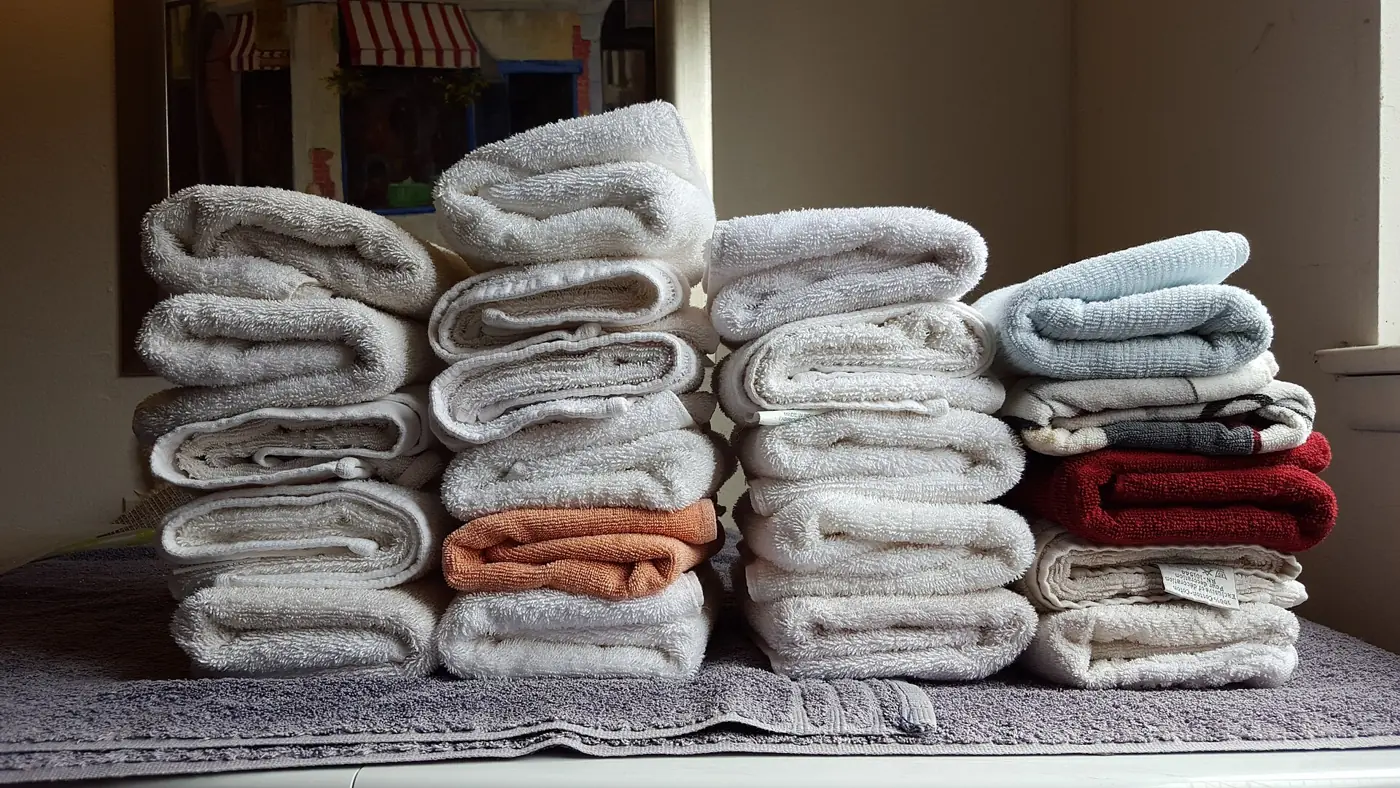
White towels grey quickly if washed with dark items and yellow if over-dried. Make-up and fake tan also leave marks that can make the whole towel look dingy. Washing towels in their own loads, at an appropriate temperature with the right detergent dose, and drying them carefully keeps them bright.
Robes
Robes are often worn over skin that has just been moisturised, so they pick up oils at the collar and cuffs. They are bulky and often washed less often than they should be. Treat them like pillowcases: pre-treat the oily areas and wash thoroughly.
Duvet covers
The top edge of a duvet cover gets the same oils as pillowcases. It is easy to miss because the rest of the cover stays relatively clean. Check that edge when inspecting linen.
Bath mats
Bath mats pick up dirt from feet and floors, and are best washed separately from sheets and pillowcases.
16An inspection routine for housekeeping
Housekeepers handle every item of linen, which makes them the best early-warning system a hotel has. A simple inspection routine, built into the way linen is used, catches discoloured items before guests do.
When making a bed
Before a sheet or pillowcase goes onto a bed, the housekeeper gives it a quick look in good light: is it bright, even and unmarked? Anything noticeably dull, yellow at the edges or spotted goes into a separate bag rather than onto the bed.
When stripping a bed
As linen comes off, the housekeeper checks the pillow area of the bottom sheet and each pillowcase for make-up, oils and stains. Heavily soiled items go into a separate bag so they can be pre-treated.
When receiving clean linen
Whoever receives clean deliveries spot-checks a few items from each bundle against the reference sheet. If a whole batch looks dull, it is raised with the laundry the same day.
A reject bag
Every linen room should have a clearly marked bag for items that do not meet the standard. A supervisor reviews the bag weekly and decides whether each item goes back for rewashing, becomes a cleaning cloth or is retired.
17The white linen checklist
- Wash whites only with whites.
- Use the right detergent dose; do not overload.
- Wash as warm as the label allows.
- Pre-treat pillowcases and pillow lines.
- Rinse thoroughly.
- Dry fully without over-drying.
- Press with clean equipment at the right heat.
- Store dry, dark, cool and off the floor.
- Keep linen away from cleaning chemicals.
- Avoid routine chlorine bleaching of blends.
- Keep a new reference sheet for comparison.
- Retire linen in batches when it no longer recovers.
How ArkLaundry helps
Hotel whites are washed separately from coloured items, dried fully and pressed. Sheets from your own stock start at £1.35 / £1.50, excluding VAT.