01The last few metres matter most
A tablecloth can be washed perfectly, pressed beautifully and folded neatly at the laundry, then arrive at the restaurant and be ruined in the last few metres of its journey. It is dumped on a damp floor while the delivery is checked, stuffed into an overcrowded cupboard, pulled out from under a heavy stack so it creases, carried past the fryer, and laid on a table by someone in a hurry who drags it across the surface. By the time a guest sits down, the crisp cloth looks tired.
Restaurants often spend money and attention on how linen is washed and very little on what happens to it afterwards. Yet the way clean linen is received, stored, handled and laid has a huge effect on how it looks on the table. It also affects how long linen lasts: cloths that are crushed, dragged and creased repeatedly need more frequent pressing and wear out faster.
This guide covers that last stretch: receiving clean linen, storing it, handling it, laying tablecloths, folding napkins, changing linen during service and looking after it so it lasts. It also covers the basics of how much table linen to keep, though a separate guide goes into that in more detail.
Who this is for
It is written for restaurant managers, front-of-house teams and owners of cafés, pubs and event venues who use cloth napkins and tablecloths, whether they own their linen and send it to a laundry or wash it themselves.
02Receiving clean linen
The moment clean linen arrives is the first chance to protect it and the first chance to check it.
- Have a clean, dry surface ready for the delivery: a table or shelf, never the floor.
- Check the count against what was sent and note any differences.
- Spot-check a few napkins and cloths from each bundle for stains, tears and dampness.
- Put linen away promptly, before the kitchen gets busy.
- Keep the wrapping on until linen is needed, if it arrives wrapped.
Damp deliveries
If linen arrives damp, perhaps because of rain or condensation in a van, do not put it into a closed cupboard. Spread it out to air, and tell the laundry. Damp linen stored closed can develop mildew spots and smells within a day or two.
Reporting problems
If cloths come back stained, torn or creased badly, set them aside and report them the same day, with photos. Most laundries will rewash or repress items that fall short, but they need to know quickly.
03Storing table linen
Good storage keeps linen clean, dry, uncreased and easy to find.
The ideal linen store
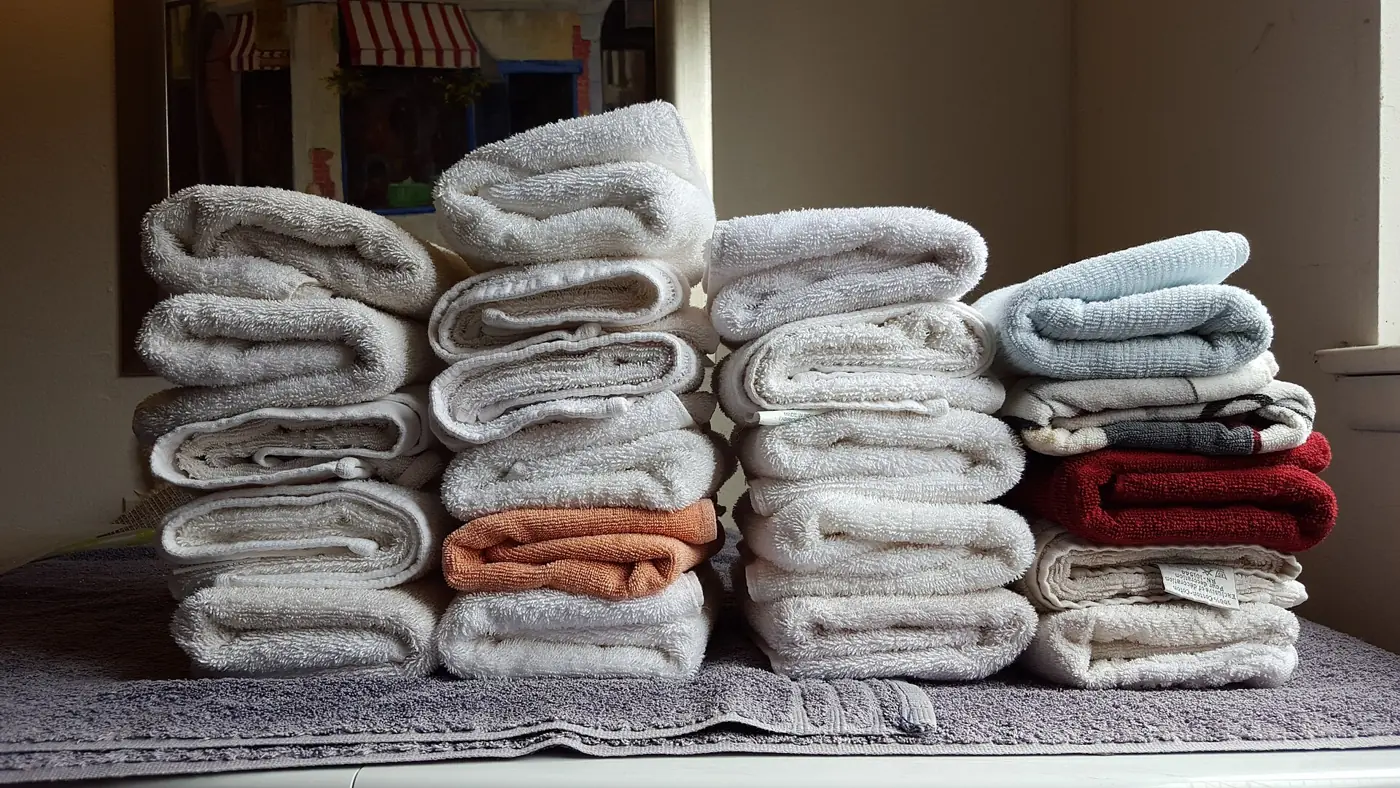
A dedicated cupboard or room, dry and cool, away from the kitchen's heat, steam and smells, and away from cleaning products. Shelves deep enough for folded tablecloths to lie flat without overhanging. Enough space that stacks do not have to be piled very high.
Shelving
Smooth, clean shelves are best. Rough wooden shelves can snag fabric and, if untreated, can mark linen over time. Lining shelves with a clean cloth or using sealed or metal shelving avoids this.
Stack height
Very tall stacks crush the linen at the bottom, creating sharp creases that are hard to remove, and they topple when someone pulls from the middle. Keep stacks to a manageable height and take from the top.
Label the shelves
Label shelves by item and size: large square cloths, small square cloths, round cloths, runners, napkins, top cloths. Staff in a hurry grab the wrong size from an unlabelled shelf.
04Preventing creases
Creases are the enemy of a crisp table. Some come from the laundry's fold, which is expected and usually falls out quickly. Others come from bad storage and handling, and these are harder to fix.
Fold lines
Pressed tablecloths are folded in a consistent way so that, when laid, the fold lines run straight across the table. A single, sharp centre crease running down the middle of the table is often considered acceptable or even desirable. Random creases from crushing are not.
Hanging or rolling
Some restaurants hang large tablecloths on padded rails or roll them around cardboard tubes to avoid fold lines altogether. This takes more space but gives a crease-free cloth. It suits fine dining and events where the table is the centrepiece.
Do not overfill
The most common cause of creases is overcrowding: cloths squashed into a cupboard that is too small. If cloths always come out creased, the store is too full or the stacks are too high.
05Handling clean linen
Clean linen picks up marks quickly if it is handled carelessly.
- Handle clean linen with clean, dry hands, never straight after handling food or used plates.
- Keep clean linen away from used linen, dirty trays and bins.
- Carry cloths folded, not bunched; carry napkins in stacks, not by the handful.
- Never put clean linen on the floor, even briefly.
- Keep clean linen away from the bar, where it can be splashed.
Greasy fingerprints
White cloths show greasy fingerprints clearly. A server who handles bread and then picks up a clean napkin can leave visible marks. Encouraging staff to wash or wipe their hands before setting tables prevents this.
06Laying a tablecloth properly
A well-laid tablecloth is centred, even on all sides, with the fold lines running true and no wrinkles across the surface.
Steps for a square or rectangular table
- Check the cloth is the right size for the table.
- Stand at one side of the table and unfold the cloth partway, keeping the centre fold.
- Place the centre fold along the centre of the table.
- Open the cloth towards the far side, then the near side, without dragging it across the table.
- Adjust so the drop is equal on all four sides.
- Smooth the surface lightly with the flat of the hand from the centre outwards.
Drop length
The drop is the amount of cloth hanging down from the table edge. A shorter drop looks casual and keeps cloths out of guests' laps; a longer drop looks formal. Floor-length cloths are usually for events and buffets. Whatever you choose, use the same drop on every table so the room looks consistent.
Round tables
For a round table, the cloth's diameter should equal the table's diameter plus twice the drop you want. A cloth that is too small leaves the table edge showing; too large and it pools on the floor and trips staff.
07Folding napkins
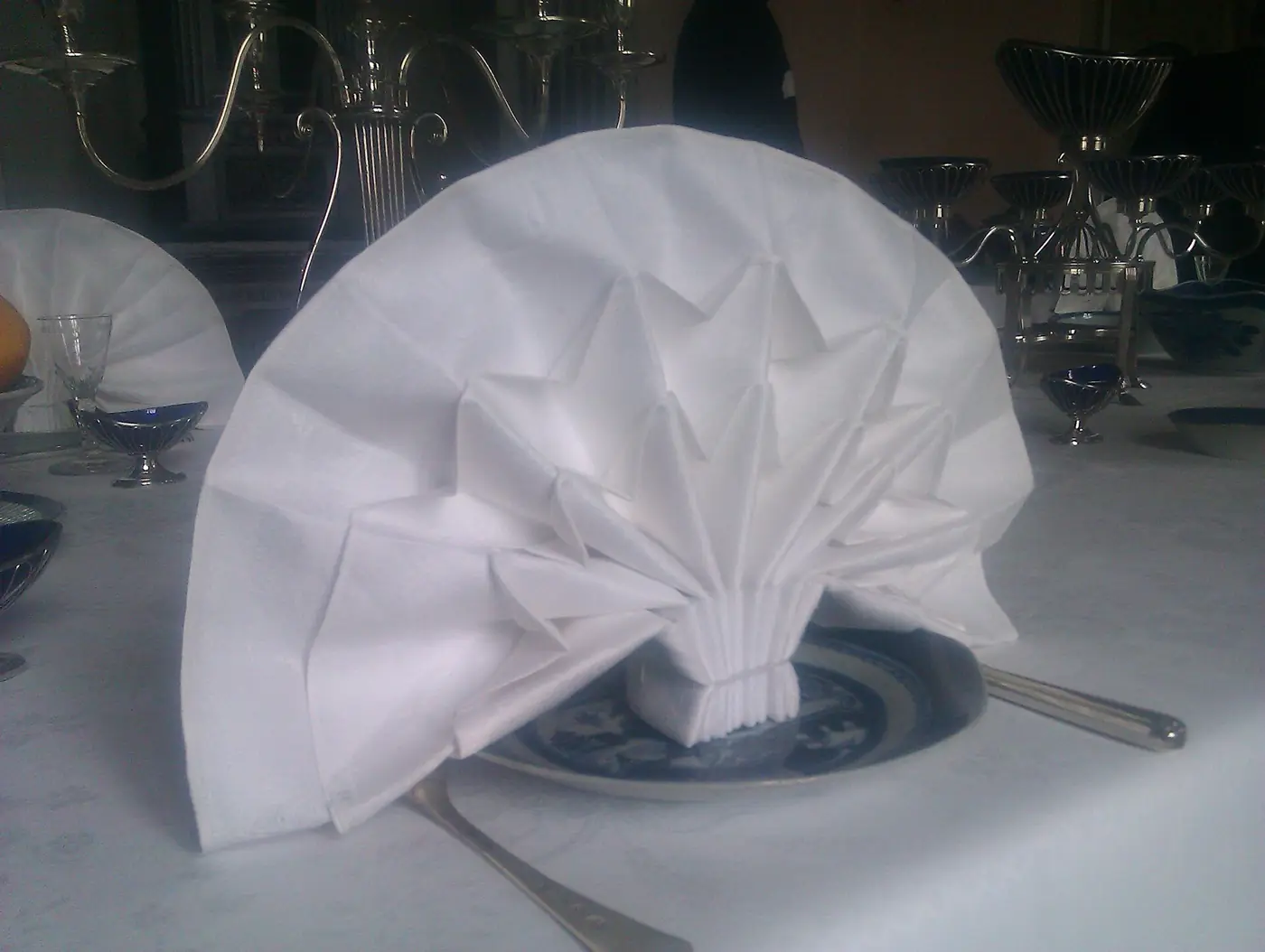
Napkin folds range from simple to elaborate. Most restaurants choose a simple, consistent fold that is quick to make, looks neat and holds its shape.
The simple rectangle
Fold the napkin in half, then in half again to make a square, then in half to make a rectangle. Place it to the left of the setting or on the plate. It is fast, neat and works for every style.
The triangle
Fold the napkin in half diagonally to make a triangle, then fold again for a smaller triangle. Place it on the plate with the point facing the guest.
The pocket fold
Fold the napkin into a rectangle, then fold the top layer back on itself to create a pocket where cutlery or a menu card can sit. It looks smart for set menus and events.
The bishop's mitre
A taller, standing fold associated with formal dining. It needs well-starched or crisp napkins and takes practice, so it suits restaurants where staff have time to fold in advance.
Consistency matters more than complexity
Guests remember a perfectly consistent room far more than an elaborate fold. Choose one fold, show every member of staff, and use it on every table.
08Napkins on the table
Napkins are handled by guests directly, so they need extra care.
Replacing dropped napkins
A napkin that falls on the floor should be replaced immediately with a fresh one, without fuss. Servers should carry or have quick access to spare napkins.
Between courses
Some restaurants refold a guest's napkin when they step away from the table. If you do this, staff should handle the napkin as little as possible and never use it for anything else.
Napkin rings and holders
Napkin rings and holders look decorative but add handling time and need cleaning. If you use them, make sure they are clean and free of sharp edges that could snag the fabric.
09Changing linen during service
Linen needs changing between guests and sometimes during a meal.
Between sittings
When a table turns, check the cloth. Crumbs can be brushed off, but marks and spills mean a change. Covering a stained cloth with a top cloth is acceptable in some settings, as long as the stain does not show through.
Mid-meal spills
If a large spill happens during a meal, replace the cloth if it can be done without disrupting the guests, or cover the area neatly with a clean napkin and offer to move them if they wish.
Crumbing down
Removing crumbs with a crumber or a folded napkin keeps the cloth looking clean between courses and reduces how often cloths need changing.
10Top cloths and runners
Top cloths, sometimes called slip cloths, are smaller cloths laid over a larger base cloth, often at a diagonal. Runners are long narrow strips down the centre of a table.
Why use them
Top cloths protect the base cloth and can be changed more often, which saves washing large cloths. They also add colour or texture.
Caring for them
Top cloths and runners need the same storage and handling care as base cloths. Runners in particular crease easily and are best stored flat or rolled.
11Choosing table linen fabric
The fabric affects how linen looks, how it handles stains, how it creases and how long it lasts.
| Fabric | Look | Practical notes |
|---|---|---|
| Cotton | Classic, crisp when pressed | Absorbs well; creases; washes well |
| Polycotton | Smooth, crease-resistant | Durable; holds oil more than cotton |
| Pure linen | Textured, elegant | Creases heavily; very durable; feels luxurious |
| Polyester | Uniform, crease-resistant | Very durable; less absorbent napkins |
| Damask | Woven pattern, formal | Traditional; shows pattern when pressed |
Napkins
Napkins should be absorbent, which favours cotton and linen. Very synthetic napkins push spills around instead of absorbing them.
Tablecloths
Tablecloths need to hang well and resist creasing. Polycotton and heavier cottons hang nicely and stay smooth.
12White or coloured
White table linen is the classic restaurant choice: it looks clean, it can be washed firmly and every piece matches every other. Coloured linen can suit a restaurant's style and hide minor stains, but it fades over time and needs separate washing.
Mixing colours
If you use coloured napkins with white cloths, keep them in separate bags and separate washes. A single red napkin in a load of white tablecloths can tint the whole load pink.
13Burns, holes and tears
Table linen is damaged in ways other linen is not.
Candle burns
Candles that are too close to cloths, or that drip and are knocked over, can scorch or burn holes. Use stable holders that catch wax and keep candles away from the edges of tables.
Cutlery and broken glass
Knives and broken glass caught in bundled linen can cut through fabric in the wash. Check linen before bagging.
Wear at table edges
Cloths wear at the points where they hang over table edges, especially on tables with sharp corners. Rotating cloths so the same part of the cloth is not always at the edge spreads the wear.
Repairs
Small tears in hems can sometimes be repaired. Holes in the middle of a cloth usually mean it should be downgraded to back-of-house use or retired.
14When to retire table linen
Table linen should be retired when it no longer looks right on the table.
- Stains that do not come out after treatment.
- Thin, worn patches or holes.
- Faded or uneven colour.
- Frayed or damaged hems.
- Shrinkage that leaves cloths too small for the tables.
Second life
Retired tablecloths make useful covers for back-of-house tables, staff meal tables or storage. Retired napkins can become polishing cloths, as long as they are clearly marked and never return to the dining room.
15Setting up the service station
The service station, sometimes called a side station or waiter station, is where servers keep the things they need during service: cutlery, glasses, condiments, and a working stock of clean napkins and cloths. How it is set up decides how quickly staff can replace linen and how clean that linen stays.
What to keep there
- Enough folded napkins for the section's expected covers, plus extras for drops and spills.
- A few spare tablecloths or top cloths for mid-service changes.
- A crumber or a folded service cloth for crumbing down.
- A clearly separate bag or basket for used napkins and cloths.
Keep clean and used apart
The most common mistake at service stations is a clean napkin stack sitting right next to a pile of used ones or a tray of dirty glasses. Clean linen should be in a drawer or a covered shelf, with used linen in a bag below or away from it.
Restock before service
Restocking clean linen at the station should be part of the pre-service setup, so nobody needs to run to the linen store in the middle of a busy service.
16Weddings, parties and banquets
Events put table linen under special pressure. Many tables are laid at once, often with long or floor-length cloths, runners, overlays and folded napkins, and everything needs to look perfect at the same moment.
Plan ahead
List every table, its shape and size, the cloth and drop needed, the number of covers and the napkin fold. Order or prepare linen with a margin for spills and last-minute changes.
Long cloths
Floor-length cloths crease easily and show every fold. Store them hung or rolled if possible, lay them early, and allow time for creases to drop. A handheld steamer can remove stubborn creases on the table, used carefully and away from guests.
Napkin folding in advance
For large events, fold napkins the day before or early on the day, and store them carefully so they keep their shape.
After the event
Events often finish late and staff are tired. Make sure linen is still checked for cutlery, candles and food, stained items are separated and bags are stored somewhere cool.
17Pests, smells and storage problems
Linen stores can attract problems if they are not checked regularly.
Smells
Linen absorbs smells from its surroundings. A store next to the kitchen picks up cooking smells; a store next to bins picks up worse. Keep linen away from strong smells, and do not store it in the same cupboard as cleaning products, which can also mark fabric.
Damp
A linen store against an outside wall or in a basement may be damp, especially in winter. Signs include a musty smell and small dark spots on linen. Move linen away from damp walls, improve ventilation and use the stock more quickly.
Pests
Quiet, undisturbed stacks of soft fabric can attract mice and insects in buildings where they are present. Regular use, rotation and checks of the back of shelves reduce the risk. Any sign of pests in a linen store should be dealt with promptly, and affected linen rewashed.
18Cloth or paper napkins
Many restaurants weigh cloth napkins against paper. Both have their place.
| Cloth napkins | Paper napkins | |
|---|---|---|
| Feel and impression | Generous, quality | Casual, practical |
| Absorbency | Good, especially cotton and linen | Varies; tears when wet |
| Cost per use | Purchase plus washing | Purchase only |
| Waste | Reused many times | Single use |
| Storage | Needs linen storage | Needs dry storage |
| Handling | Counting, bagging, laundry | Restocking, bins |
Mixed approaches
Some restaurants use cloth napkins for dinner and paper at lunch or on the terrace. Others use cloth at the table and paper at the bar. What matters is that the choice fits the style and price point of each service.
The guest's view
Guests often read cloth napkins as a sign of care and quality. A restaurant that charges fine-dining prices with paper napkins can feel inconsistent.
19If you wash table linen yourselves
Some cafés and small restaurants wash table linen in-house. It can work for small volumes, but presentation suffers without pressing.
Washing
Wash napkins and cloths in their own loads, separate from kitchen cloths and staff clothing. Use a measured detergent dose and the temperature the label allows. Pre-treat stains first.
Drying and finishing
Take linen out of the dryer while very slightly warm and fold it immediately to reduce creases. For a crisp finish, cloths need pressing; a rotary iron or a good steam iron can make a big difference, though it takes time.
When to outsource
If staff are spending a lot of time washing and ironing linen, or the results do not match the standard you want, comparing the cost with a laundry service is worthwhile.
20Rotating stock
Linen at the top of the pile gets used over and over, while linen at the bottom sits unused. The used items wear out quickly and the unused ones may yellow or pick up storage smells. Rotation solves both.
First in, first out
Put freshly delivered linen at the bottom or back of the stack and take from the top or front. This simple habit spreads wear evenly across the whole stock.
Mark batches
If you buy new linen in batches, mark the care label discreetly with the purchase date or a batch letter. It makes it easy to see how old each item is and when a batch is due for replacement.
21A pre-service linen routine
Half an hour before doors open is when the room takes shape. A short routine makes sure every table is right before the first guest arrives.
- Walk the room and check every cloth for marks, creases and an even drop.
- Replace any cloth that is marked or creased beyond a quick touch-up.
- Check every napkin is folded the house way and placed correctly.
- Restock service stations with clean napkins and spare cloths.
- Check the used-linen bags are empty and in place.
- Make sure the linen store is tidy and the next stack is ready.
Who checks
A manager or senior server should do the final walk. A fresh pair of eyes catches things the person who laid the table misses.
How ArkLaundry helps
Table linen comes back pressed and folded, ready to store flat and lay. Napkins from your own stock are £0.45 each, excluding VAT.