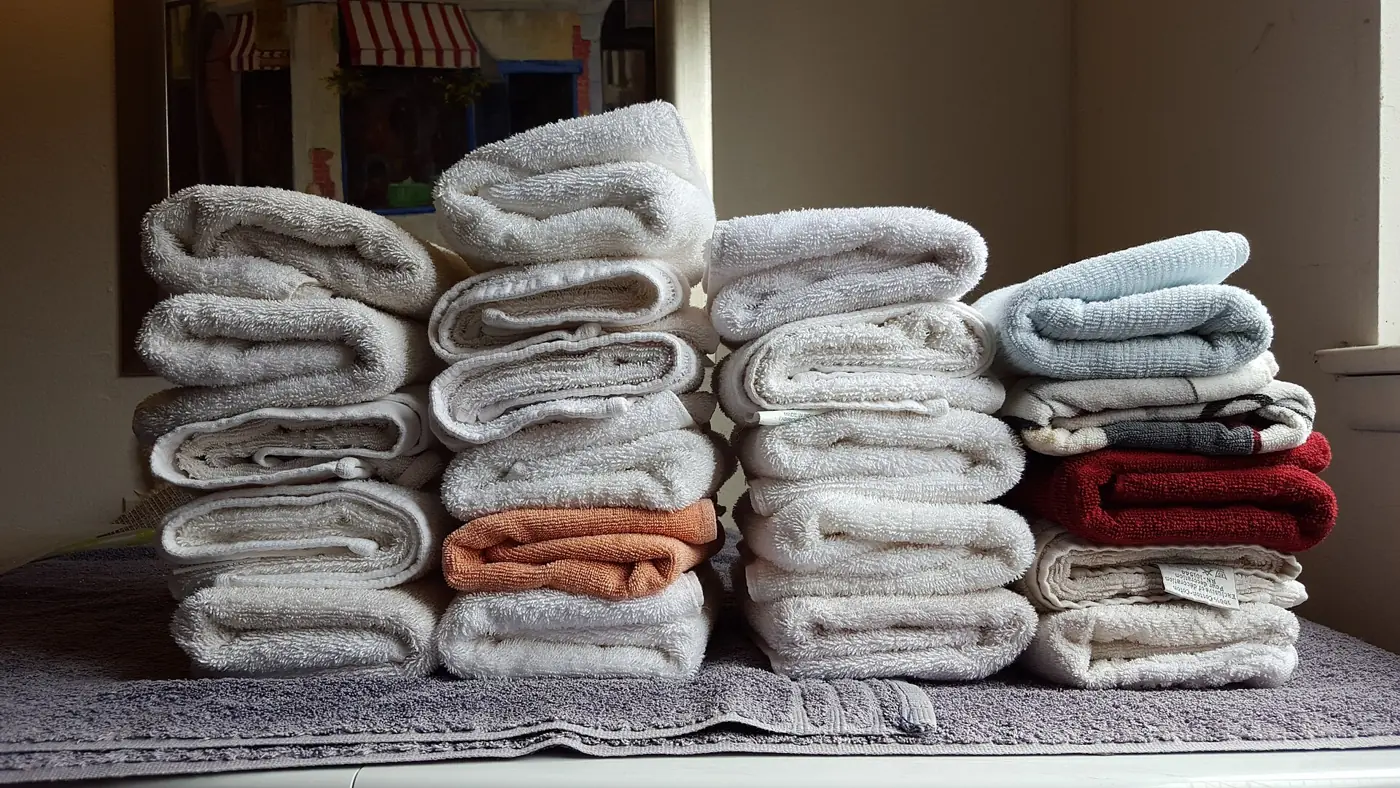
01Why cloths matter so much
Walk into almost any small kitchen and you will find cloths everywhere: a tea towel over the oven door, a damp cloth by the sink, a blue cloth on the counter, another tucked into an apron string, a glass cloth over a shoulder. They are so ordinary that they become invisible. Yet in food safety terms, cloths are one of the most important things in the room, because they touch everything.
A cloth used to wipe a chopping board where raw chicken was cut, then used to wipe a counter where sandwiches are made, carries bacteria from one to the other. A tea towel used to dry hands, then to dry plates, carries whatever was on those hands onto the plates. A damp cloth left in a warm corner for a few hours becomes a breeding ground, and every surface it touches afterwards gets a fresh coat of what grew in it. Cloths are not just dirty in themselves; they actively move contamination around.
The good news is that cloth hygiene is simple and cheap to get right. It comes down to a handful of habits: using different cloths for different jobs, changing them often, never leaving them damp, washing them hot and separately, and storing clean cloths properly. This guide explains each one in practical terms for cafés, delis, bakeries and small kitchens.
What this guide does not replace
This guide is practical advice, not a substitute for your own food safety management system or the guidance of your local environmental health team. If your food safety plan sets specific rules for cloths, follow those.
02The cloths in a small kitchen
Most small kitchens use several kinds of cloth, often without thinking of them as separate items. Naming them is the first step to managing them.
| Cloth | Typical use | Key risk |
|---|---|---|
| Tea towel | Drying dishes, cutlery, sometimes hands | Spreading bacteria from hands to clean items |
| Dish cloth | Washing up, wiping plates | Food residue, stays damp |
| Cleaning cloth | Wiping counters, tables, equipment | Cross-contamination between areas |
| Microfibre cloth | Cleaning surfaces, glass, stainless steel | Holds residue if washed wrongly |
| Glass cloth | Polishing glasses | Lint and streaks if dirty or softened |
| Side towel or oven cloth | Handling hot pans and trays | Burns if damp; grease build-up |
| Bar cloth | Wiping bar tops and spills | Sugar and alcohol residue |
| Disposable cloth | Single tasks, raw food areas | Reused when it should be thrown away |
One cloth, one job
The most important principle is that each type of cloth has one job. A tea towel is not a cleaning cloth. A cleaning cloth is not a hand towel. An oven cloth is not a dish cloth. Once cloths swap jobs, the separation that keeps food safe disappears.
03Colour coding
Many kitchens use colour-coded cloths so everyone can see at a glance which cloth belongs to which job or area. The exact scheme is up to the kitchen; what matters is that everyone knows it and follows it.
An example scheme
One common approach uses different colours for raw food areas, ready-to-eat food areas, general front-of-house cleaning and washrooms. For example, a kitchen might use one colour for raw meat preparation, another for areas where ready-to-eat food is handled, another for front-of-house tables and counters, and another for toilets and washrooms. Your own scheme might differ.
Making it work
- Choose a scheme and write it down.
- Put a chart on the wall where cloths are kept.
- Buy cloths only in the agreed colours.
- Store each colour separately.
- Wash washroom cloths entirely separately from kitchen cloths.
- Train every new member of staff on day one.
Tea towels and colour
Tea towels can follow the same idea: plain white tea towels for drying clean crockery, for example, and a different colour for anything else. A colour that stands out from cleaning cloths makes mix-ups less likely.
04Disposable or reusable
Kitchens increasingly mix disposable and reusable cloths. Both have a place.
Disposable cloths
Disposable cloths are used for a single task and thrown away. They are useful where the risk is highest, such as wiping up after raw meat or cleaning up spills of bodily fluids, because there is no chance of reusing a contaminated cloth. The risk is that disposable cloths are reused because they still look clean.
Reusable cloths
Reusable cloths, including tea towels and microfibre, produce less waste and are cheaper over time. They are safe as long as they are changed often, washed hot and dried fully between uses.
A sensible mix
Many cafés use disposable cloths for raw food and high-risk cleaning, and reusable cloths for general wiping, drying and polishing, washed by a laundry or on site.
05How often to change cloths
There is no single number that suits every kitchen, but cloths should be changed far more often than most people think.
| Cloth | Change at least | Change immediately if |
|---|---|---|
| Cleaning cloth | Several times a day, and between areas | Used on raw food surfaces, visibly dirty |
| Tea towel | Several times a day | Damp, used on hands, dropped, dirty |
| Dish cloth | Several times a day | Smells, greasy, slimy |
| Glass cloth | Every few hours in busy service | Damp, smeared, dropped |
| Oven cloth | Whenever damp or greasy | Any dampness at all |
The smell test is too late
A cloth that smells sour or musty has already grown a large population of bacteria. Change cloths on a schedule, not when they smell.
End of day
Every reusable cloth used during the day should go into the laundry bag at closing. None should be left on the counter overnight to be used again in the morning.
06The problem with damp cloths
Bacteria need moisture, warmth and food to grow. A damp cloth in a warm kitchen, carrying traces of food, provides all three.
Where damp cloths hide
- Draped over a tap or the sink edge.
- Folded on the counter by the coffee machine.
- Stuffed in an apron pocket or tied to an apron string.
- Left in a bucket of water that was once sanitiser.
- Rolled up in a used-cloth bag in a warm corridor.
Keeping cloths dry
- Have enough cloths that a fresh one is always available.
- Hang cloths in use to dry between tasks, spread out, not bunched.
- Put used cloths straight into a ventilated bin or bag, not a sealed one.
- Get used cloths washed promptly, at least daily.
Sanitiser buckets
Some kitchens keep cloths in a bucket of sanitiser solution between uses. If you do, the solution must be made up correctly and changed regularly, as directed by the product. A bucket of weak, dirty solution is worse than no bucket at all.
07Tea towels in particular
Tea towels are the cloths most often misused. In homes, they dry hands, dishes, counters and spills, and that habit comes into cafés with staff.
Hands
Drying hands on tea towels is one of the main ways bacteria reach clean dishes. Many food businesses provide disposable paper towels at hand wash basins for this reason, so tea towels are used only for crockery and cutlery.
Air drying instead
Where possible, let crockery and cutlery air dry on racks after washing. Tea towels are then used only for polishing or for items that must be dry immediately.
Fresh tea towels, often
If tea towels are used, change them often during service and never use a damp one. A pile of fresh tea towels within reach makes the right choice easy.
08Microfibre cloths
Microfibre cloths are excellent at picking up dirt and grease, and they are used widely for cleaning and polishing. They need specific care.
- Wash microfibre separately from cotton, which sheds lint that clogs microfibre.
- Do not use fabric softener; it coats the fibres and stops them working.
- Wash at the temperature the manufacturer recommends; very high heat can damage some microfibre.
- Dry fully, at a moderate heat.
- Replace microfibre when it stops picking up dirt or feels rough.
09Glass cloths
Glass cloths have one job: polishing clean glasses without leaving lint, streaks or smears. Any residue on the cloth ends up on the glass.
- Keep glass cloths for glasses only.
- Use lint-free cloths in good condition.
- Change them when damp; a damp cloth streaks.
- Never use fabric softener on glass cloths.
- Wash them separately from greasy kitchen cloths.
10Oven cloths and side towels
Cloths used for handling hot pans and trays have a safety job as well as a hygiene one.
Always dry
A dry cloth insulates; a damp cloth conducts heat straight to the hand. Damp oven cloths cause burns. Replace them as soon as they are even slightly damp.
Grease and fire
Oven cloths collect grease, and a greasy cloth near a flame or a hot surface can catch fire. Change them when greasy and keep them away from burners.
Oven gloves
Fabric oven gloves need washing too. Many can be machine washed; check the label. Damaged or thin gloves should be replaced.
11Washing cloths properly
Washing is where cloth hygiene is completed. A cloth that has been used properly but washed badly goes back into the kitchen carrying the problem.
Separate loads
Kitchen cloths should be washed separately from aprons, uniforms, table linen and anything that touches customers. Washroom cloths should be washed separately again, or replaced with disposables.
Hot washing
Reusable cleaning cloths and tea towels are usually washed on a hot cycle, as hot as the label allows, with a suitable detergent. Heat, detergent and time together remove grease and reduce bacteria.
Rinsing and drying
Rinse thoroughly and dry completely. Cloths folded away damp will smell and grow bacteria before they are used again.
Domestic machines
Small cafés often wash cloths in a domestic machine. Check that it actually reaches the temperature the programme claims, do not overload it, and keep it clean. A machine that smells is not cleaning properly.
12Storing clean cloths
Clean cloths can be recontaminated before they are used if storage is careless.
- Store clean cloths in a closed container, drawer or cupboard.
- Keep them away from raw food, waste and cleaning chemicals.
- Store each colour separately.
- Never store clean and used cloths together.
- Keep enough clean cloths in stock for a full day plus spares.
13How many cloths to keep
Running out of clean cloths is the main reason staff reuse dirty ones. Stock should cover a full day's use, plus the days cloths are away being washed, plus a buffer.
A simple estimate
Count how many cloths of each type are used in a busy day. Multiply by the number of days between washing and return, plus one. Add a margin for busy days.
Signs of too few
Staff hunting for clean cloths, cloths being rinsed and reused, or cloths drying on radiators all mean stock is too low.
14Bar cloths and bar tops
Cafés with a bar, and pubs serving food, have cloths that face sugar, alcohol, fruit and dairy all day.
Sugar and stickiness
Spilled drinks leave sugar that attracts flies and makes bar tops sticky. Cloths that wipe up sugary spills become sticky themselves and spread the residue. Change bar cloths often and rinse sugary spills with clean water before wiping dry.
Separate from glass cloths
Bar cloths wipe surfaces; glass cloths polish glasses. A bar cloth used on a glass leaves a sticky film; a glass cloth used on the bar carries that film to the next glass. Keep them visibly different and stored apart.
Drip mats and bar runners
Fabric bar runners and drip mats soak up drinks and need washing daily. Rubber mats should be washed and dried, not left wet overnight.
15Bakeries and delis
Bakeries and delis have their own cloth needs.
Bakeries
Bakers use cloths to cover proving dough, dust work surfaces and wipe benches. Proving cloths, often heavy linen called couche cloths, are usually dusted with flour and not washed after every use, but they must be kept dry and brushed clean, and washed when they become damp, sticky or mouldy. Bench cloths used on flour and dough should be separate from cloths used for general cleaning.
Delis
Delis handle raw and cooked meats, cheese and ready-to-eat foods side by side. Clear separation between cloths for raw products and cloths for ready-to-eat counters is essential. Cheese and cured meat counters often use separate cloths for each area, and disposable cloths for slicers.
Slicers
Meat and cheese slicers need thorough cleaning with appropriate cloths or disposable wipes. A cloth used on a slicer should never go back into general use without washing.
16Mops and mop heads
Mops are cloths on a stick and carry the same risks on a larger scale.
- Use separate mops for kitchen floors, front-of-house floors and washrooms, ideally colour-coded.
- Rinse mop heads after use and hang them to dry, head up, not left in the bucket.
- Wash mop heads regularly on a hot cycle if they are machine washable.
- Replace mop heads when they are worn or smell even after washing.
- Never wash mop heads with cloths used on food surfaces.
Buckets
A mop left standing in dirty water overnight grows bacteria and smells. Empty, rinse and dry buckets after use.
17Cloths and allergens
Cloths can carry allergens from one surface to another just as they carry bacteria. A cloth used to wipe up flour can transfer gluten; a cloth used near a nut station can transfer nut residues.
- Use separate cloths, or disposable cloths, for allergen-free preparation areas.
- Change cloths before preparing allergen-free orders.
- Do not use the same cloth across allergen and allergen-free stations.
- Wash cloths thoroughly; washing removes food residues including allergens.
18Washroom cloths
Cloths used to clean toilets and washrooms must never come near food areas.
- Use a distinct colour for washroom cloths.
- Store them in the washroom or a separate cleaning cupboard, never in the kitchen.
- Wash them entirely separately from kitchen cloths, or use disposables.
- Wash hands after cleaning washrooms and before handling food.
19When someone has been ill
If a member of staff or a customer has been sick on the premises, cleaning up needs special care, and cloths are part of that.
- Use disposable cloths and gloves to clean up, and throw them away afterwards in a sealed bag.
- Do not use reusable kitchen cloths for this job.
- Clean and disinfect the area according to your food safety procedures.
- Wash hands thoroughly afterwards.
- Any reusable textiles affected, such as tablecloths or seat covers, should be bagged separately, labelled and washed separately.
Staff who have been ill with stomach symptoms should follow your business's exclusion rules before returning to work with food.
20Adding cloths to your cleaning schedule
Most food businesses keep a cleaning schedule listing what is cleaned, how, how often and by whom. Cloths belong on it, because they are part of cleaning and need managing like any other equipment.
| Task | How often | Who |
|---|---|---|
| Put out clean cloths by colour | Opening | Opening staff |
| Change cleaning cloths | Every few hours and between areas | All staff |
| Replace tea towels | Several times a day | Whoever is on washing up |
| Check no damp cloths left out | Midday and closing | Supervisor |
| Bag all used cloths | Closing | Closing staff |
| Wash or send cloths | Daily | Named person or laundry |
| Clean mops and buckets | Daily | Closing staff |
| Check cloth stock | Weekly | Manager |
Signing off
Some cafés ask staff to initial the schedule when tasks are done. It is a simple way to make sure nothing is forgotten, and it shows an inspector that cloths are part of the routine.
21Sponges, scourers and brushes
Sponges and scourers are cloths in another form, and they hold even more moisture and food. A kitchen sponge that sits wet by the sink all day can become one of the dirtiest objects in the room.
- Use sponges and scourers only for washing up, never for wiping counters.
- Rinse and squeeze them after use and leave them to dry in a rack, not in a puddle.
- Replace sponges frequently; they are cheap and hard to clean thoroughly.
- Washing-up brushes dry faster than sponges and can be cleaned in a dishwasher.
- Keep a separate brush or scourer for pans with raw food residue.
22Buying the right cloths
The cloths you buy affect how well they clean, how easily they are kept apart and how long they last.
Tea towels
Cotton or linen tea towels absorb well and dry glass and crockery without streaks. Linen is especially good for glass. Choose a size that is easy to handle and a weave that does not shed lint. Plain colours that differ clearly from cleaning cloths help keep them separate.
Cleaning cloths
Choose sturdy cloths in your colour-code colours. Thin cloths tear and shed; very thick cloths take a long time to dry. A mid-weight cloth that dries quickly suits most kitchens.
Microfibre
Good microfibre cloths last many washes if cared for. Cheaper ones may lose their effectiveness quickly. Buy from a supplier who can supply the same colours reliably.
Disposable cloths
Choose disposables strong enough for the task, in colours that match your scheme.
Buying in quantity
Buy enough of each type to cover a day's use plus the washing cycle, and reorder before stock runs low. Keep a note of what you buy so you can reorder exactly the same.
23Food trucks and market stalls
Mobile kitchens face the same cloth risks with far less space and water.
Limited water
With limited hot water, cloths cannot be rinsed and reused safely during the day. Carry enough clean cloths for the whole trading day, and use disposable cloths for raw food and spills.
Storage on board
Keep clean cloths in a sealed box and used cloths in a separate closed bag. Never let used cloths sit in a warm vehicle overnight; take them home or to the depot to be washed the same day.
Hand drying
Use disposable paper towels for hands, since there is rarely space to manage clean hand towels safely.
24Family cafés and play cafés
Cafés that welcome young children, including play cafés, see more spills, sticky hands and accidents. High chairs, play areas and changing facilities all need cleaning, and cloths for these areas need their own place in the system.
- Use a separate colour for high chairs and play areas.
- Use disposable cloths for nappy changing areas and any bodily fluids.
- Wipe high chair trays with a fresh cloth for each child.
- Keep play area cloths out of the kitchen entirely.
Parents notice how high chairs and tables are wiped. Seeing a fresh cloth used for each table builds trust.
How ArkLaundry helps
Cleaning cloths are always washed separately from aprons and table linen, hot and dried fully. Small cafés can send them by weight at £3.20 a kilo, excluding VAT.